Medisplint Medisplint

What Are the Types of Spinal Internal Fixation Systems?

Time:2026-11-16 Author:Aria
0%

Spinal Internal Fixation Systems are devices used to stabilize selected parts of the spine. They may help maintain alignment while bones heal or support a fusion. The design depends on the spinal region, the condition being treated, and a patient’s anatomy. These details matter.

Common systems include pedicle screws connected by rods, plates attached to vertebrae, and specialized cervical fixation devices. Surgeons may also use interbody cages between vertebrae, often alongside screws or plates. A cage is not the same as a fixation construct, though the terms can appear together in discussions of spinal surgery. That distinction is easy to miss.

Each design has different uses and limits. Pedicle screw-and-rod systems are often used in the thoracic or lumbar spine, while cervical plates and screws may support selected neck procedures. The exact approach depends on imaging, bone quality, surgical goals, and other clinical factors. There is no single system for every case.

This guide explains the main types, their basic components, and where they are commonly considered. It also clarifies how fixation differs from fusion and why device choice requires clinical judgment. Materials and techniques can vary. Names can vary, too. Readers should treat this overview as general education, not a personal treatment recommendation. A qualified spine specialist can explain the risks, alternatives, and expected recovery for an individual situation. Even clear diagrams cannot replace that conversation.
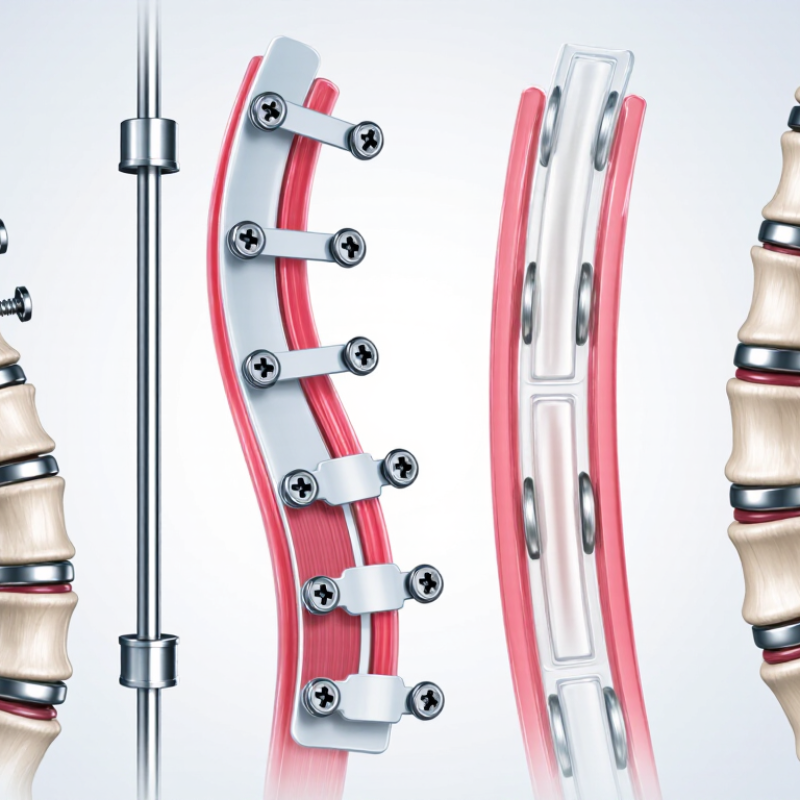
What Are the Types of Spinal Internal Fixation Systems?

Major Components and Configurations of Spinal Internal Fixation Systems

Spinal internal fixation systems are assemblies, not single devices. Their components stabilize selected vertebrae while fusion or healing progresses. The layout depends on spinal level, anatomy, and surgical approach. It is not one-size-fits-all.

In a common posterior construct, pedicle screws anchor in the vertebrae and connect to contoured rods. Cross-links may join the rods when additional rotational stability is needed. Hooks or wires are used in selected situations, but they are not interchangeable with screws. Small connectors can link or extend components. Fit matters.

Other configurations use plates and screws along the front or side of the spine. Interbody cages sit between vertebral bodies and may be used with fixation hardware; they are separate components. Implants commonly use titanium alloys or other medical-grade metals, selected for factors such as strength and imaging considerations. Surgeons consider bone quality, the levels involved, and alignment shown on imaging. Even a carefully planned construct has trade-offs: more hardware does not automatically mean better healing. Details vary, and that uncertainty deserves honest discussion.

Posterior Fixation Systems: Pedicle Screws, Rods, and Hooks

Posterior fixation systems stabilize the spine from the back. They commonly combine pedicle screws, metal rods, and sometimes hooks. The goal is to limit unwanted movement while bone heals or an alignment is maintained. Not a simple frame. Each part must suit the patient’s anatomy and the reason for surgery.

Pedicle screws pass through the back of a vertebra into its pedicle, a narrow bridge of bone. A surgeon connects the screws with rods, which help hold the selected spinal position. Screw placement requires careful planning because nerves and blood vessels lie nearby. Imaging and surgical judgment guide placement, but anatomy can vary from one vertebra to another.

Hooks can attach to parts of the vertebra, such as the lamina, rather than entering the pedicle. They may be used when screw placement is unsuitable or as part of a combined construct. Rods and connectors must fit securely; even small differences in contour can affect how the system sits. The best configuration is not identical for every patient. Surgeons weigh bone quality, spinal level, and the intended correction, while recognizing that no fixation system removes every risk or guarantees a particular result.

Posterior Spinal Fixation: Components in a Typical One-Level Construct

This example shows two adjacent vertebrae fixed with bilateral pedicle screws connected by two rods. Hooks are alternative or additional anchors in selected cases and are not included in this example. Actual constructs vary by anatomy and surgical plan.

Anterior Fixation Systems: Plates, Screws, and Interbody Devices

Anterior fixation systems approach the spine from the front. In cervical surgery, a plate is secured to the vertebrae with screws, while an interbody device holds space between them after a disc is removed. The device may contain bone graft material to support fusion. Plate-and-screw constructs can limit movement during healing; a cage can help maintain disc height and alignment. The right combination depends on the spinal level, bone quality, number of segments, and the patient’s anatomy.

Scale matters. The Global Burden of Disease 2021 study estimated that 619 million people had low back pain in 2020, with projections reaching 843 million by 2050 (The Lancet Rheumatology, 2023). That figure describes a broad health burden, not a demand for surgery or proof that any implant works. A plate may offer added stability, but it can also increase swallowing discomfort after cervical surgery. More hardware is not automatically better. I would not treat a cage as a promise of fusion; healing depends on several factors, including bone health and smoking status.

Tips: Ask which level is being treated, why a plate is or is not recommended, and how imaging will confirm alignment and healing. Small details matter. A clear explanation of expected benefits and risks is part of sound surgical planning.

What Are the Types of Spinal Internal Fixation Systems? – Anterior Fixation Systems: Plates, Screws, and Interbody Devices

Device Type Typical Location Main Function How It Provides Support Common Materials Key Considerations
Anterior cervical plate Front of the cervical spine, commonly used after discectomy and fusion Helps stabilize the operated spinal levels while fusion develops A plate spans one or more vertebral levels and is secured to the vertebral bodies with screws Titanium alloys or stainless steel Plate profile, screw placement, and proximity to nearby structures are considered during surgical planning
Anterior cervical screws Vertebral bodies in the cervical spine Anchor a plate or provide fixation as part of a device with integrated screws Engage the vertebral body; some designs allow a fixed or variable screw angle Titanium alloys or stainless steel Screw length, trajectory, and purchase in bone are important design and placement considerations
Anterior lumbar plate Front of the lumbar spine, used in selected anterior fusion procedures Adds supplemental stability across a fused spinal level Attaches to the vertebral bodies, usually in combination with an interbody device Titanium alloys or stainless steel Use depends on the surgical approach, anatomy, and the overall fixation plan; not every anterior lumbar fusion uses a separate plate
Interbody device (cage or spacer) Between adjacent vertebral bodies after disc removal Maintains disc-space height and provides a space for bone graft or bone-growth material Supports the vertebral endplates; fusion occurs as bone grows across the treated level Titanium, polymer such as PEEK, or combinations of materials Shape, size, surface features, and fit affect contact with the vertebral endplates; the device may be used with supplemental fixation
Interbody device with integrated fixation Most commonly used in selected cervical or lumbar interbody fusion procedures Combines interbody support with a means of anchoring the device to adjacent vertebrae Built-in screws or anchors connect the device to the vertebral bodies, reducing the need for a separate plate in some procedures Titanium, polymer, or combinations of materials, with metallic fixation elements where applicable Whether it can replace a separate plate depends on the device design, spinal level, anatomy, and surgical plan

Note: Device selection and use vary by spinal level, patient anatomy, bone quality, and surgical objectives. This table provides general educational information and is not a substitute for clinical advice.

Cervical, Thoracic, and Lumbar Fixation System Designs

Cervical, thoracic, and lumbar fixation systems differ because each spinal region has distinct anatomy and loading demands. In the neck, compact plates and screws may stabilize the front of the spine, while posterior systems use small screws and rods. The hardware must fit around delicate structures and preserve room for nearby movement. Small parts matter. A few millimeters can change the fit.


Thoracic fixation commonly uses paired rods connected to screws placed in the vertebrae. The rib cage adds stability, but narrow spaces and changing bone angles make placement demanding. Surgeons assess imaging, bone quality, and the condition of each vertebra before selecting a configuration. A rod may follow the spine’s curve, but it should not force an unsuitable shape.


Lumbar systems often use stronger rods and larger pedicle screws to manage substantial loads, particularly during bending and lifting. Some procedures combine posterior fixation with support between vertebral bodies. Still, the categories can oversimplify real surgery. A neat diagram makes regional boundaries look clearer than they are; actual anatomy varies, and the chosen design depends on the individual case. The system’s purpose is stability while healing occurs, not a guarantee of a particular result.

Dynamic and Hybrid Systems Compared with Rigid Fixation

Dynamic and hybrid constructs aim to preserve some movement, while rigid fixation limits motion across the treated segment. Dynamic systems use flexible rods or controlled-motion components. Hybrid systems combine a rigidly fused level with a motion-preserving level. The choice depends on anatomy, bone quality, instability, and surgical goals—not the device alone.

Clinical evidence remains mixed.

A systematic review and meta-analysis published in World Neurosurgery in 2017 compared dynamic stabilization with lumbar fusion. It reported similar improvements in pain and disability measures, alongside lower blood loss and shorter operating time for dynamic procedures. These findings came from varied studies, so they do not guarantee the same result for every patient.

Small details matter: a loose screw, poor bone purchase, or excessive motion can change the outcome. Rigid fixation may better control instability, but it permanently restricts movement at the fused level. Dynamic fixation may retain limited motion. Not a free pass.

Hybrid constructs can target different problems at adjacent levels, though evidence on long-term benefits remains uncertain. The boundary between “dynamic” and “rigid” is not always clean in practice. Clinicians should weigh imaging, symptoms, and validated outcome data together.

FAQS

What are the main parts of a spinal fixation system?

A common posterior system uses screws anchored in vertebrae and rods connecting them. Small connectors or cross-links may be added. Fit matters.

Are interbody cages part of the fixation hardware?

A cage sits between vertebral bodies and may be used alongside fixation hardware. It is a separate component.

Why do spinal fixation designs differ by region?

The neck, chest, and lower back have different anatomy and loading demands. A few millimeters can change the fit.

What hardware is commonly used in the neck?

Compact plates and screws may stabilize the front of the spine. Posterior designs may use smaller screws and rods near delicate structures.

How does thoracic fixation account for the rib cage?

The rib cage adds stability, but narrow spaces and changing bone angles can make screw placement demanding.

Why might lumbar systems use larger screws and stronger rods?

The lower back handles substantial loads during bending and lifting. Larger screws and stronger rods may help manage those demands.

Do surgeons always add more hardware for greater stability?

No. More hardware does not automatically improve healing. The best configuration depends on anatomy, bone quality, and the levels involved.

What materials are commonly used for implants?

Implants often use titanium alloys or other medical-grade metals. Strength and imaging considerations can influence material selection.

Does a carefully planned fixation system guarantee a particular result?

No. Its purpose is to stabilize selected vertebrae while healing occurs, not guarantee an outcome. A clean diagram can be misleading.

Conclusion

Spinal Internal Fixation Systems are designed to stabilize the spine and support alignment while bones heal or a treated segment is fused. Their main components may include screws, rods, plates, hooks, and interbody devices, arranged according to the spinal region, the condition being treated, and the support required. Posterior systems commonly connect pedicle screws with rods, while hooks may be used in selected configurations. Anterior systems approach the spine from the front and may combine plates and screws with devices placed between vertebrae.

System designs vary across the cervical, thoracic, and lumbar regions because each area has different anatomical and mechanical demands. Some constructs provide rigid fixation to limit movement, whereas dynamic systems allow a degree of controlled motion. Hybrid configurations combine features of different approaches. Choosing among these designs depends on the treatment plan and the need for stability, alignment, and support.

Aria

Aria

Aria is a dedicated marketing professional with a deep passion for innovative strategies and a keen understanding of our company's product offerings. With a wealth of experience in the industry, Aria excels at crafting engaging content that highlights the unique features and benefits of our......