Medisplint Medisplint

China Top Self Tapping Bone Screws Manufacturers?

Time:2026-10-10 Author:Amelia
0%

Choosing China’s top Self Tapping Bone Screws manufacturers requires more than comparing prices or polished product catalogs. These implants must perform predictably inside demanding surgical environments. Thread geometry, flute design, core strength, material selection, and surface finish can influence insertion torque and fixation security. Small details matter.

Orthopedic trauma specialist Dr. David L. Helfet has emphasized, “Implant choice must serve both the biology and mechanics of the fracture.” That principle remains highly relevant when reviewing Self Tapping Bone Screws suppliers. A capable manufacturer should demonstrate controlled production, validated inspection, and consistent dimensional accuracy. Evidence matters more than confident language.

Manufacturers should be assessed through ISO 13485 certification, material traceability, mechanical testing, cleanroom controls, and documented quality systems. Buyers should also examine whether the supplier supports titanium and stainless-steel options, sterile or non-sterile packaging, and compatible driver interfaces. Clear technical drawings are essential. So are batch records.

A factory visit can reveal practical differences. Observe machining areas, measuring equipment, laser marking, packaging stations, and rejected components. Ask how thread damage is handled. Ask who releases each batch.

No supplier is perfect. I would not treat a low quotation as proof of efficiency. It may reflect scale, or it may hide weak controls. That uncertainty deserves attention. The strongest Chinese manufacturers combine engineering experience with transparent documentation and responsive communication. They also understand that a screw is not merely a metal part. It becomes part of a surgical decision, a patient’s recovery, and a clinician’s professional responsibility.
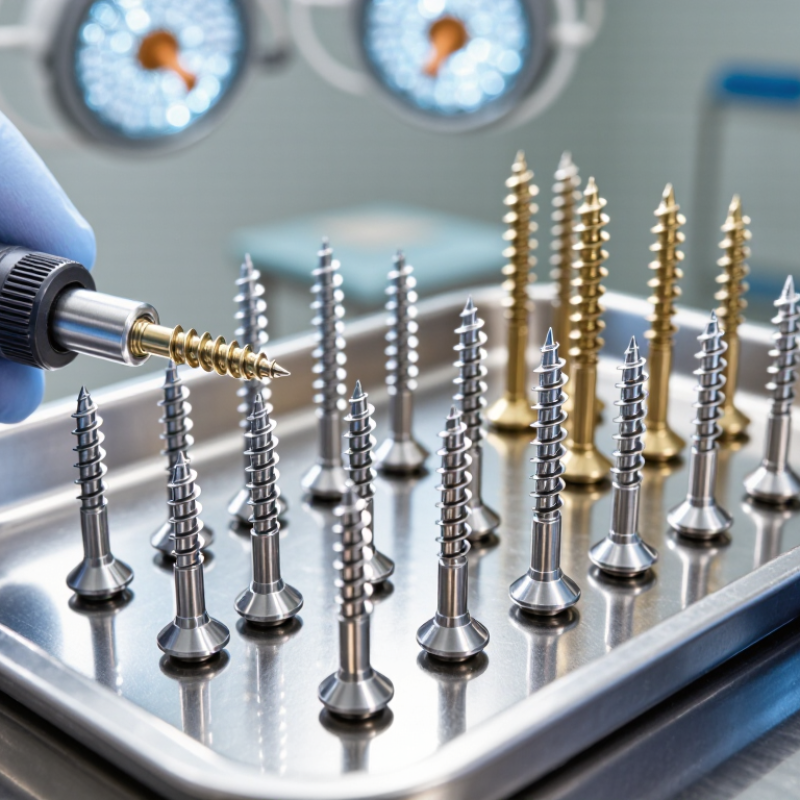
China Top Self Tapping Bone Screws Manufacturers?

What Are Self-Tapping Bone Screws and How Do They Work?

Self-tapping bone screws have cutting features near their tips. These flutes create threads inside bone as the screw advances. The surgeon may not need to tap the entire thread path separately. However, self-tapping does not always mean self-drilling. Many designs still require a pilot hole, especially in dense cortical bone.

The process is mechanical and precise. A drill creates the entry channel. The screw then cuts or shapes internal threads while turning under controlled torque. Its thread pitch, core diameter, tip angle, and surface finish affect insertion resistance.

In softer cancellous bone, deeper threads can improve purchase. In harder bone, aggressive flutes may raise heat or damage the thread path. Small details matter.

When evaluating China-based self-tapping bone screw manufacturers, buyers should examine material certificates, dimensional inspection records, sterilization controls, and batch traceability. Manufacturing systems aligned with recognized medical-device quality standards can support consistent production, but certificates alone prove little. Ask for torque testing, pull-out data, corrosion testing, and sample inspection. It is easy to focus on polished packaging. That can be misleading. A screw may look excellent yet perform poorly if its thread geometry varies. Clinical selection must remain with qualified medical professionals and follow the requirements of the target market.

Key Standards for Evaluating Chinese Bone Screw Manufacturers

When evaluating Chinese self-tapping bone screw manufacturers, product quality should come before catalog size. A credible supplier should operate under ISO 13485 and provide clear quality-control records. Ask for material certificates, batch traceability, and validated sterilization data. Titanium alloy, thread geometry, and surface treatment must match the stated specification.

Look closely at engineering evidence. Request mechanical test reports covering insertion torque, pull-out strength, fatigue resistance, and dimensional accuracy. Testing should follow relevant ISO or ASTM methods, with sample sizes and conditions clearly recorded. A serious manufacturer can explain its inspection process, not merely send attractive photographs. Inspectors should also review CNC equipment, cleaning areas, packaging controls, and calibration records.

Small details reveal practical reliability. Under magnification, thread edges should appear consistent without burrs or flattened tips. The self-tapping flute should cut predictably in a controlled test block. Packaging should protect the sterile barrier from punctures and moisture. Supplier audits, corrective-action records, and complaint handling deserve equal attention. A factory may pass one audit yet still show weak follow-up discipline. That matters. No evaluation is perfect. Human judgment can overlook a quiet process failure. Independent verification, surgeon feedback, and repeated batch testing can reduce that risk before purchasing decisions are made.

Leading Chinese Manufacturers of Self-Tapping Bone Screws

Leading Chinese manufacturers of self-tapping bone screws combine precision machining with practical orthopedic experience. Their production often supports titanium and stainless-steel screw options, with varied thread profiles, diameters, and lengths. A reliable manufacturer should explain how each design supports insertion, fixation, and handling during surgery.

Strong suppliers usually control key steps in-house, including CNC machining, thread forming, surface finishing, cleaning, and packaging. They should provide material certificates, dimensional inspection records, and validated sterilization information when required. Experienced engineers can also discuss driver compatibility and resistance to stripping. However, a polished catalog proves little. Sample evaluation and independent documentation remain important.

Tips: Ask for drawings, tolerance data, batch records, and test methods before placing an order. Confirm whether the factory supports small trial quantities and design adjustments. Review communication quality, not only quoted prices. No supplier is perfect. Even an experienced manufacturer may need clearer feedback on thread geometry or instrument fit. Careful technical dialogue often reveals more than marketing language.

The chart compares the minimum tensile and yield strength requirements of two widely used implant materials for self-tapping bone screws: titanium alloy Ti-6Al-4V ELI under ASTM F136 and wrought stainless steel 316L under ASTM F138. These material benchmarks support supplier evaluation without ranking or displaying company data.

Materials, Designs, and Customization Options Available

China Top Self Tapping Bone Screws Manufacturers: Materials, Designs, and Customization Options

China’s self-tapping bone screw manufacturers commonly work with titanium alloy and stainless steel. Titanium alloy offers high strength, corrosion resistance, and lower imaging interference. Stainless steel remains practical for selected fixation procedures. A 2024 orthopedic implants market report estimated the global sector at over USD 45 billion, with annual growth near 6%. This demand encourages tighter control over material certificates, surface finish, and dimensional accuracy.

Design selection should match the target bone and surgical technique. Cortical screws usually use finer threads, while cancellous screws need deeper threads for softer bone. Common options include cannulated bodies, locking heads, hexagonal drives, and self-drilling flutes. Thread pitch, core diameter, tip geometry, and head profile can be adjusted. Small details matter. A poorly matched flute may increase insertion torque or create unwanted heat. ISO 5835 and ISO 6475 provide useful dimensional references, but compliance depends on the complete device and manufacturing process.

Customization may include diameter, length, thread form, drive recess, anodized color, packaging, and inspection plans. Manufacturers can also support trial samples, fatigue testing, torque testing, and surface roughness checks. An industry quality report published in 2023 found that dimensional inspection and traceability remain frequent concerns in orthopedic supply chains. That warning deserves attention. Faster delivery is attractive, yet incomplete validation creates avoidable risk. Product drawings, material traceability, sterilization compatibility, and batch records should be reviewed before volume production.

China Top Self Tapping Bone Screws Manufacturers? - Materials, Designs, and Customization Options Available
Data Dimension Common Options Typical Characteristics Customization Availability
Implant Material 316L stainless steel High corrosion resistance, good strength, and widely used for temporary or permanent orthopedic fixation applications. Available with specified material grade, chemical composition, mechanical-property requirements, and material certificates.
Implant Material Titanium alloy Ti-6Al-4V ELI High strength-to-weight ratio, excellent corrosion resistance, and a modulus of elasticity lower than stainless steel. Available with specified titanium grade, heat treatment, surface condition, and traceability documentation.
Implant Material Commercially pure titanium Good biocompatibility and corrosion resistance; commonly selected where lower strength requirements are acceptable. Grade selection, surface finish, hardness range, and inspection requirements can be defined in the technical drawing.
Material Standard ASTM F136 titanium alloy Specification for wrought titanium-6 aluminum-4 vanadium ELI alloy used in surgical implants. Mill certificate, batch traceability, chemical analysis, and mechanical testing can be requested.
Screw Diameter Approximately 1.5 mm to 7.3 mm Selection depends on anatomical location, bone quality, fixation load, plate system, and surgical technique. Custom outer diameter, core diameter, pitch, and transition geometry can be produced according to approved drawings.
Screw Length Approximately 6 mm to 120 mm Length is selected to achieve adequate purchase without excessive penetration beyond the target bone. Custom length, tip position, measurement reference, and tolerance requirements are available.
Thread Profile Coarse, fine, cancellous, cortical, or dual-lead thread Thread geometry can be matched to cortical bone, cancellous bone, bicortical fixation, or specific orthopedic procedures. Pitch, flank angle, thread depth, crest radius, and thread length can be customized.
Self-Tapping Tip Fluted cutting tip, trocar point, or drill-point tip Designed to create or enlarge the threaded pathway during insertion and reduce the need for separate tapping in suitable applications. Number of flutes, cutting-edge geometry, tip angle, and flute length can be adjusted for the intended bone type.
Thread Coverage Fully threaded or partially threaded Fully threaded designs provide continuous purchase; partially threaded designs can support interfragmentary compression when properly selected. Threaded and unthreaded shaft lengths can be specified independently.
Head Design Hexagonal, low-profile, countersunk, locking, or cannulated head Head geometry affects soft-tissue clearance, plate compatibility, insertion torque transfer, and seating behavior. Head diameter, height, underside angle, locking features, and countersink profile can be customized.
Drive Interface Hexalobular, hexagonal socket, cruciform, or proprietary surgical drive The drive interface should provide secure engagement with the screwdriver and minimize stripping during insertion. Drive size, engagement depth, torque requirements, and compatible instrument geometry can be specified.
Cannulation Solid or cannulated shaft Cannulated screws can be guided over a Kirschner wire, supporting controlled placement in minimally invasive procedures. Central bore diameter, bore length, tip opening, and cannulation tolerance can be defined.
Surface Finish Machined, polished, blasted, or chemically passivated Surface condition influences cleanliness, corrosion resistance, handling, and interaction with surrounding tissue. Surface roughness range, blasting medium, passivation process, and visual acceptance criteria can be specified.
Surface Coating Uncoated, anodized titanium, or porous titanium coating Coating selection depends on the intended clinical application, wear considerations, osseointegration objectives, and regulatory requirements. Color, coating thickness, roughness, adhesion testing, and coating area can be defined where technically appropriate.
Dimensional Tolerance Drawing-based tolerances Critical dimensions commonly include major diameter, core diameter, pitch, length, head geometry, and drive dimensions. Geometric tolerances, inspection methods, sampling plans, and measurement equipment can be included in the specification.
Mechanical Testing Torque, torsion, pull-out, fatigue, and dimensional verification Testing should be selected according to the screw design, material, intended use, and applicable regulatory pathway. Test fixtures, acceptance limits, batch size, test frequency, and reporting format can be agreed in advance.
Biological Evaluation Biocompatibility assessment based on ISO 10993 principles Evaluation may consider the nature and duration of body contact, manufacturing residues, sterilization, and patient exposure. Material declarations, chemical characterization, biological evaluation documentation, and testing plans can be prepared.
Quality Documentation Certificate of conformity, inspection report, material certificate, and batch traceability Documentation supports incoming inspection, production control, technical-file preparation, and product traceability. Document language, inspection format, lot numbering, packaging records, and retention period can be specified.
Packaging Individual protective packaging, tray packaging, or cleanroom-compatible packaging Packaging should protect the screw from contamination, corrosion, deformation, and damage to the drive or cutting tip. Label content, barcodes, pouch or tray configuration, carton quantity, and private-label-free packaging can be requested.
Sterilization Status Non-sterile supply or validated sterile supply Non-sterile products require processing according to the responsible healthcare facility or device manufacturer’s validated procedures. Sterilization method, packaging validation, shelf-life studies, and sterility assurance requirements can be defined for suitable products.

Note: Dimensions and configurations shown are representative industry ranges rather than universal specifications. Final material selection, design validation, testing, sterilization, and regulatory documentation should be confirmed for the intended clinical application.

How to Select and Verify a Reliable Chinese Supplier

China Top Self Tapping Bone Screws Manufacturers?

Selecting a Chinese supplier requires more than comparing unit prices. The ISO Survey 2023 reported tens of thousands of valid ISO 13485 certificates worldwide. A certificate alone proves little if its scope excludes orthopedic implants. Request the certificate, issuing body, site address, and covered product category. Then verify them independently. Confirm titanium or stainless-steel grades through mill certificates and incoming inspection records. Ask for dimensional reports, thread profiles, surface treatment details, and packaging controls. A reliable manufacturer should explain its process clearly.

Practical verification matters. Review sample screws under magnification. Check thread sharpness, tip geometry, head seating, and burrs. Request mechanical test data, including insertion torque, pull-out strength, fatigue performance, and corrosion resistance. These tests should identify standards, equipment, sample sizes, and acceptance limits. The FDA’s 2023 medical-device recall data also shows why traceability and process control deserve attention; manufacturing defects remain a recurring concern. Do not accept edited screenshots as evidence. Arrange a remote or on-site audit when possible. One weakness: audits can still miss problems between production batches.

Tips: Use a small trial order before approval. Compare three batches, not three photographs. Match lot numbers across raw materials, inspection records, sterilization documents, and final packaging. Check whether the supplier reports nonconformities honestly. Ask what happened during the last failed test. A thoughtful answer is often more valuable than a perfect-looking file. Also confirm export documentation, quality agreements, complaint handling, and post-market support before signing. Pricing can change. Traceability should not.

FAQS

What are self-tapping bone screws?

They have cutting flutes near the tip. These flutes form internal threads as the screw advances through bone.

Are self-tapping screws always self-drilling?

No. Many designs still need a pilot hole. Dense cortical bone often requires careful drilling before insertion.

How does the insertion process work?

A drill creates the entry channel. The screw then shapes the internal threads under controlled torque.

Which design features affect insertion resistance?

Thread pitch, core diameter, tip angle, and surface finish all matter. Small differences can change handling noticeably.

Should thread designs differ between hard and soft bone?

Yes. Deeper threads may improve purchase in cancellous bone. Aggressive flutes can create heat or damage hard bone.

What documents should buyers request from a manufacturer?

Request material certificates, dimensional records, batch traceability, and sterilization information when required.

Which performance tests are useful before purchasing?

Ask for torque, pull-out, corrosion, and sample inspection data. Test methods should be clearly described.

Can attractive packaging prove screw quality?

No. A polished catalog can mislead us. Thread variation may remain hidden until practical testing.

What should buyers check during supplier discussions?

Review drawings, tolerances, driver compatibility, and instrument fit. Ask whether small trials or design adjustments are possible.

Who should make the final clinical selection?

Qualified medical professionals should choose the screw. They must follow clinical needs and target-market requirements.

Conclusion

Self Tapping Bone Screws are specialized orthopedic fixation devices designed to create their own threads as they are inserted into bone, helping simplify placement and provide stable fixation. This article explains their working principles, common materials such as titanium alloys and stainless steel, thread and tip designs, and customization options for different surgical requirements. It also outlines the key factors used to evaluate Chinese manufacturers, including product quality, manufacturing capabilities, material traceability, sterilization processes, testing procedures, and compliance with applicable medical-device standards.

The article further introduces the types of Chinese suppliers that may produce Self Tapping Bone Screws and explains how buyers can compare their technical expertise, production capacity, documentation, and after-sales support. To select a reliable supplier, purchasers should verify certifications, inspect quality-control systems, request samples and technical files, assess communication efficiency, and confirm that products meet the intended market’s regulatory and clinical requirements.

Amelia

Amelia

Amelia is a seasoned marketing professional with a wealth of expertise in our company’s core offerings. With an unwavering passion for driving growth and innovation, she plays a pivotal role in shaping our marketing strategies and enhancing brand visibility. A key aspect of her responsibilities......