Medisplint Medisplint

2026 Top Types of Cancellous Screws for Buyers?

Time:2026-10-05 Author:Oliver
0%

Choosing the right Cancellous Screws in 2026 requires more than comparing prices, coatings, or package quantities. Buyers must examine bone quality, thread design, insertion technique, and the surgeon’s preferred workflow. A screw that looks ideal on paper may perform poorly in soft metaphyseal bone. Small details matter, including thread depth, pitch, washer compatibility, cannulation, and head profile.

Orthopedic trauma expert Dr. David L. Helfet has expressed a practical principle: “The implant must serve the fracture, not the other way around.” This idea remains valuable when comparing partially threaded, fully threaded, cannulated, headless compression, and bioabsorbable Cancellous Screws. Each type creates a different balance between compression, fixation, removal needs, and surgical visibility. Cannulated models can guide placement over a wire. Fully threaded designs may provide stronger purchase when controlled compression is not the primary goal. Still, no type wins every case.

This buyer-focused guide evaluates the leading options for 2026. It considers material quality, thread geometry, sterile packaging, dimensional consistency, and supplier documentation. It also addresses practical concerns, such as screw bending during insertion or poor seating beneath cartilage. These problems are not always visible in a product catalog. That is the uncomfortable part.

Price alone can mislead. A low-cost screw may create extra handling time, revision risk, or inventory complexity. Buyers should request technical data, validated manufacturing information, and clear traceability. Clinical judgment remains essential. The “top” Cancellous Screws are not universal; they are the ones that match the anatomy, procedure, and verified quality requirements.
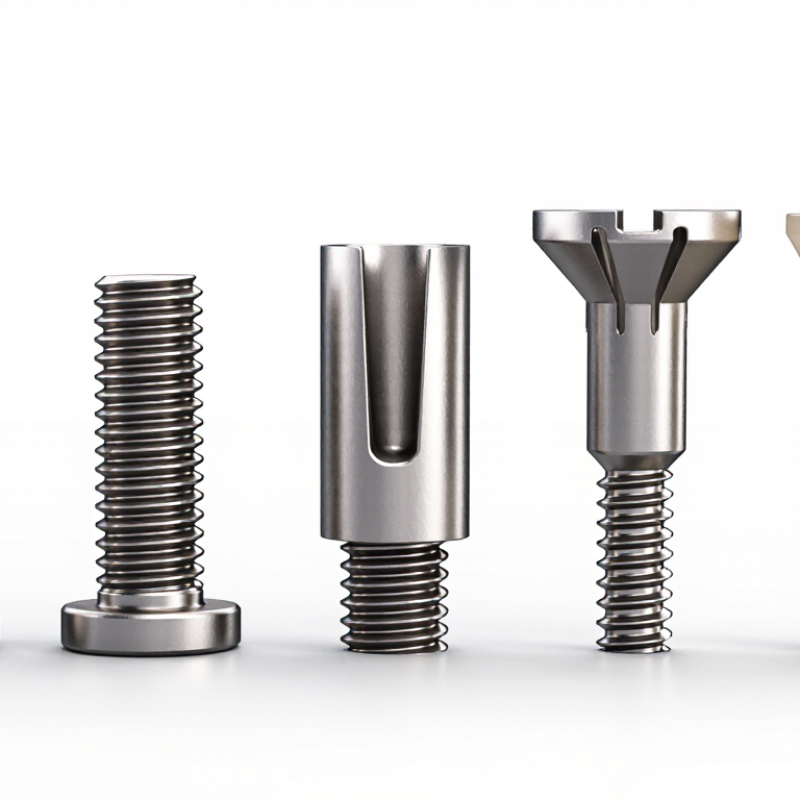
2026 Top Types of Cancellous Screws for Buyers?

What Are Cancellous Screws and Where Are They Used?

Cancellous screws are designed for softer, trabecular bone found near joint surfaces. Their coarse, deeper threads improve purchase where cortical bone is thin. Surgeons commonly use them for metaphyseal and epiphyseal fractures, including injuries of the ankle, distal radius, proximal tibia, and hip. They may also support bone grafts or lag fixation when fracture compression is required.

The International Osteoporosis Foundation reports that one in three women and one in five men over 50 may experience an osteoporotic fracture. That figure explains why bone quality matters during screw selection.

The practical choice depends on fracture pattern, bone density, screw diameter, length, thread design, and whether compression is needed. Partially threaded screws can create interfragmentary compression when the threads cross only the far fragment. Fully threaded versions may provide positioning or fixation without the same compression effect.

Washers can help distribute force in weak bone, but they are not automatically necessary.

The hard part is not naming the screw. It is matching its behavior to the patient’s anatomy.

The 2023 FDA guidance for orthopedic bone screws emphasizes material safety, mechanical performance, and design verification. Imaging and intraoperative assessment remain essential.

A longer screw is not always better; it may irritate soft tissue or approach the joint. In practice, perfect sizing is impossible before imaging. That uncertainty deserves careful review, especially in osteoporotic or fragmented bone.

How Cancellous Screws Differ by Thread, Head, and Tip Design

In 2026, cancellous screw selection depends heavily on thread geometry. Cancellous bone is softer and more porous than cortical bone. Therefore, screws usually use deeper, wider, and more widely spaced threads. These features improve purchase without relying only on friction. Partial-thread screws can create compression when the smooth shaft crosses the near fragment. Fully threaded designs provide more consistent fixation across a longer bone section. However, thread length must match the intended fixation zone. Too much thread may reduce useful compression.

Head design affects seating, stability, and soft-tissue contact. A conventional head is simple and familiar during routine insertion. A low-profile head may reduce prominence near thin coverage areas. Some designs accept a washer, which can spread load through fragile bone. Head recess shape also matters because poor driver engagement can damage the recess during tightening.

Buyers should verify dimensions, driver compatibility, material certification, and cleaning instructions. Small details matter.

Tip design changes insertion behavior. A self-tapping tip can reduce preparation steps, while a blunt tip may offer more controlled advancement in selected procedures. Cannulated tips support guidewire placement but require compatible instruments and careful inspection. In practice, buyers often compare thread length first and overlook the tip. That is a mistake. A screw may have excellent threads but still perform poorly if the tip, head, and instrumentation do not work together. The trade-off is rarely perfect. Verification with surgeons, engineers, and quality teams remains essential.

Which Materials and Coatings Are Available for Cancellous Screws?

Cancellous screws commonly use 316L stainless steel or titanium alloy, especially Ti-6Al-4V. Stainless steel offers high strength, consistent machining, and a familiar cost profile. Titanium is lighter and generally produces fewer MRI artifacts. Its lower elastic modulus may also reduce stress concentration near bone. However, titanium can be more difficult to remove after long implantation. The material choice should match bone quality, imaging needs, and the planned surgical site.

Coatings add another decision layer. Anodized titanium can improve surface hardness and reduce metal contact, while hydroxyapatite or calcium-phosphate coatings may encourage bone ongrowth. Porous titanium surfaces provide additional space for biological fixation. Evidence is promising, but coating performance depends on thickness, adhesion, sterilization, and clinical loading. That trade-off is real. A poorly controlled coating may crack, shed particles, or complicate revision surgery.

Grand View Research reported that the global orthopedic implants market was valued at over 45 billion dollars in 2023, with continued growth expected through 2030. This broader market data signals stronger demand for specialized fixation systems, not automatic proof that every coating improves outcomes. ASTM and ISO testing commonly examine mechanical strength, corrosion resistance, and biocompatibility. Buyers should request lot-specific test results, coating adhesion data, and sterilization validation. In practice, the cheapest screw is rarely the lowest-cost choice. Yet premium surface treatment can also be unnecessary when fixation depends mainly on thread design and bone purchase.

How to Match Screw Types with Bone Quality and Surgical Needs

Cancellous screws are designed for softer, porous bone, but one type cannot fit every case. The right selection depends on bone quality, fracture pattern, and the required fixation method. In weaker metaphyseal bone, a wider thread profile can improve purchase and reduce pullout risk. A longer threaded section may engage more available bone. Do not assume that longer always means stronger.

For firmer bone or controlled fragment compression, partially threaded screws can draw one fragment toward another. Fully threaded screws may provide more consistent positional fixation when compression is not desired. Cannulated screws can guide placement over a wire, which is useful when alignment must remain precise. Headless designs may reduce prominence near joint surfaces, but insertion depth requires careful control. Surgical need matters more than a simple product ranking.

Buyers should review thread diameter, thread length, core strength, insertion torque, and compatibility with washers or instruments. Check material data, sterilization instructions, traceability, and applicable regulatory documentation. Small details matter. Packaging that protects the sterile barrier is not optional.

A catalog may list impressive pullout values, yet test conditions rarely mirror every patient. Bone density, drilling technique, and screw trajectory can change performance. Procurement teams should compare verified evidence with surgeon feedback and operating-room workflow. A neat chart cannot replace judgment. Even experienced teams sometimes favor familiar handling over theoretical strength, and that choice deserves review.

What Buyers Should Check Before Choosing Cancellous Screws

2026 Top Types of Cancellous Screws for Buyers?

What Buyers Should Check Before Choosing Cancellous Screws

Cancellous screws are designed for softer, porous bone, such as metaphyseal regions. Common options include partially threaded, fully threaded, cannulated, and headless designs. A 2024 Grand View Research report estimated the global orthopedic implants market at over USD 47 billion in 2023. That figure shows market scale, not product quality. Buyers still need evidence for each screw.

Check thread depth, pitch, core diameter, and available lengths. A partially threaded screw can create interfragmentary compression when the near fragment is gliding. A fully threaded version may provide better positional fixation. Cannulation can improve guidewire placement, but it may reduce core strength. ISO 5835 and ASTM F543 outline dimensional and mechanical testing expectations for bone screws. Ask suppliers for test methods, material certificates, fatigue results, and sterilization records. “Medical-grade” alone is too vague.

Tips: Match the thread design to the bone and fixation goal. Confirm the driver interface before purchase. Review packaging integrity and lot traceability. Do not compare only by price. Also, do not assume a longer screw is safer; excessive length can irritate nearby tissue. In practice, selection can remain uncertain when catalog drawings omit thread-runout details. That deserves a second review. A qualified orthopedic professional should confirm clinical suitability before use.

2026 Top Types of Cancellous Screws for Buyers

Common cancellous screw options are specified by nominal diameter, thread design, cannulation, and head configuration. The chart shows representative metric diameters commonly encountered in orthopedic screw systems; availability varies by standard and manufacturer.

What Buyers Should Check Before Choosing Cancellous Screws

  • Nominal diameter: Confirm that the diameter matches the target bone, fragment size, and required holding strength.
  • Thread configuration: Choose fully threaded or partially threaded designs according to whether compression or positional fixation is required.
  • Cannulation: Cannulated screws support guide-wire insertion and may improve placement accuracy.
  • Head design: Compare standard, low-profile, countersunk, and headless options to manage soft-tissue irritation and implant prominence.
  • Material and compliance: Verify the material, applicable medical-device standards, sterilization status, and compatibility with the surgical system.

FAQS

Which materials are commonly used for cancellous screws?

Common materials include 316L stainless steel and titanium alloy. Stainless steel offers high strength and predictable machining. Titanium is lighter and usually creates fewer MRI artifacts.

When might titanium be preferable?

Titanium may suit patients needing lighter implants or clearer MRI imaging. Its lower stiffness can reduce stress concentration near bone. Removal may become more difficult after long implantation.

What coatings are available for cancellous screws?

Options include anodized titanium, hydroxyapatite, calcium-phosphate, and porous titanium surfaces. These coatings may improve hardness or encourage bone ongrowth. Performance depends on coating quality.

Can coatings fail?

Yes. Poorly controlled coatings may crack, shed particles, or complicate revision surgery. The trade-off is real. Adhesion and sterilization results deserve careful review.

How should buyers choose between partially and fully threaded screws?

Partially threaded screws can create compression across suitable fractures. Fully threaded screws may provide stronger positional fixation. The choice depends on bone quality and fixation goals.

What are the advantages and limitations of cannulated screws?

Cannulation can improve guidewire placement and surgical alignment. However, the hollow core may reduce mechanical strength. That compromise should not be ignored.

Which specifications should buyers check?

Review thread depth, pitch, core diameter, length, and driver interface. Also examine thread-runout details in technical drawings. Missing details create uncertainty.

What documents should suppliers provide?

Request material certificates, fatigue results, dimensional testing, corrosion data, biocompatibility evidence, and sterilization records. Lot traceability matters. “Medical-grade” alone is too vague.

Is the cheapest screw usually the lowest-cost option?

Not necessarily. Poor fit, weak documentation, or difficult revision may increase total costs. Premium coatings may also be unnecessary when thread design provides adequate fixation.

Is a longer cancellous screw always safer?

No. Excessive length can irritate nearby tissue or complicate placement. A qualified orthopedic professional should confirm the appropriate length and clinical suitability.

Conclusion

Cancellous Screws are specialized orthopedic fasteners designed to achieve stable fixation in soft, porous bone, such as metaphyseal or epiphyseal bone. Buyers should understand how variations in thread pitch, thread depth, head shape, drive style, and tip configuration influence insertion, compression, and holding strength. Different designs may support lag fixation, position fixation, or improved purchase in areas where bone density is limited.

Material and surface options commonly include surgical-grade stainless steel, titanium alloys, and selected coatings intended to support corrosion resistance, handling, or bone interaction. Choosing the right screw requires matching its diameter, length, thread pattern, and head design with bone quality, fracture pattern, surgical technique, and imaging requirements. Before purchasing, buyers should verify dimensional accuracy, mechanical performance, sterilization compatibility, packaging integrity, traceability, regulatory documentation, and consistency between product specifications and actual inventory. A reliable evaluation process helps ensure that Cancellous Screws meet clinical, manufacturing, and quality-control expectations.

Oliver

Oliver

Oliver is a seasoned marketing professional with a wealth of expertise in driving brand awareness and engagement. With a deep understanding of our company's product offerings, he consistently delivers high-quality content that enriches our professional blog. His insights not only shed light on......