Medisplint Medisplint

China Top 10 Craniofacial Implant Suppliers?

Time:2026-10-26 Author:Oliver
0%

Choosing among China’s top 10 Craniofacial Implants suppliers requires more than comparing product catalogs or factory photographs. Hospitals and reconstructive teams must examine implant materials, design accuracy, manufacturing controls, sterilization processes, and clinical support. A supplier may appear impressive online yet provide limited documentation. That gap matters.

Dr. Henry K. Kawamoto, a respected craniofacial surgeon, has noted that successful reconstruction must balance appearance, function, and patient safety. This principle remains central to evaluating Craniofacial Implants. The strongest suppliers should demonstrate experience with patient-specific planning, titanium or compatible polymer options, digital modeling, and close cooperation with surgeons. They should also explain revision pathways clearly. Good communication matters.

This guide reviews ten notable Chinese suppliers through a practical, evidence-based lens. It considers product range, customization, quality systems, export experience, technical responsiveness, and published clinical information. It does not treat company size as proof of medical quality. That would be too simple.

Some suppliers may have excellent engineering but limited long-term clinical evidence. Others may offer strong hospital relationships but weaker international documentation. These differences deserve attention. Buyers should verify certifications, traceability records, material specifications, and post-sale support before making decisions. Regulatory requirements also vary by market, so local review remains necessary.

The ranking is therefore a starting point, not a final verdict. Supplier capabilities can change. Product claims can also sound clearer than the evidence behind them. Careful verification protects patients, surgeons, and healthcare institutions while supporting better craniofacial reconstruction outcomes.
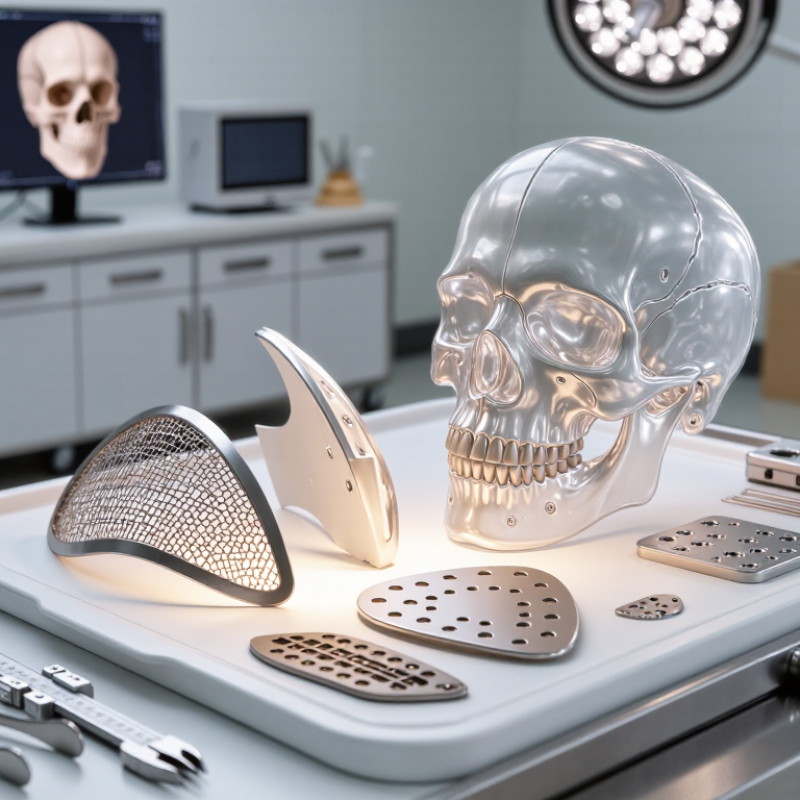
China Top 10 Craniofacial Implant Suppliers?

What Are Craniofacial Implants?

Craniofacial implants are medical devices used to restore the skull and facial skeleton. Surgeons may use them after trauma, tumor removal, infection, or congenital bone differences. Common materials include titanium, PEEK, and porous polyethylene. Each material behaves differently inside the body. Titanium offers strength and imaging compatibility. PEEK can be shaped for patient-specific reconstruction. Porous materials may encourage tissue integration, but healing still depends on blood supply and surgical technique.

A 2024 Grand View Research analysis estimated the global craniofacial implants market at more than US$1 billion in 2023. It also projected steady growth through 2030, supported by 3D imaging, digital planning, and customized implants. These figures are estimates, and market reports use different definitions. That weakness matters. A larger market does not automatically mean better patient outcomes. Clinical evidence, manufacturing controls, and long-term follow-up remain more important than sales volume. Regulatory guidance also emphasizes biocompatibility, mechanical performance, sterilization, and traceable production.

Tips: Ask whether the implant is patient-specific or standard-sized. Review CT-based planning with a qualified craniofacial team. Confirm the material, fixation method, expected imaging needs, and revision plan. A low-profile implant may look attractive, but fit and stability deserve greater attention. Surgeons should also explain uncertainty clearly, because reconstruction is rarely perfectly predictable.

How to Evaluate Craniofacial Implant Suppliers in China

How to Evaluate Craniofacial Implant Suppliers in China

Evaluating craniofacial implant suppliers requires more than comparing prices. Examine their quality system, manufacturing experience, and clinical communication. A reliable supplier should provide current ISO 13485 documentation and market-specific registration evidence. Confirm that certificates match the actual factory and product scope.

Ask how the supplier handles CT data, patient privacy, and customized design approval. Review material specifications for titanium, PEEK, or other approved implant materials. Request evidence of biocompatibility testing, dimensional inspection, sterilization control, and batch traceability. Manufacturing records should show who inspected each implant and when.

Look closely at real production details. Can engineers discuss screw placement, edge finishing, and fit around irregular bone? Can they explain revision procedures without making exaggerated claims? An anonymized case portfolio can reveal practical experience, but it should not replace independent verification. A polished factory tour can still hide weak controls. No supplier is perfect. During an audit, small gaps matter, such as unclear labeling or delayed inspection reports. Ask how corrections are documented and tracked.

Evaluate communication after delivery. Confirm response times, complaint handling, replacement procedures, and technical support for surgeons. Check whether production schedules remain stable during urgent, customized orders. Speak with qualified clinical or procurement professionals who have worked with similar devices. Their feedback may reveal issues that brochures never mention. A careful supplier welcomes difficult questions and provides precise, consistent answers.

China Top 10 Craniofacial Implant Suppliers? - How to Evaluate Craniofacial Implant Suppliers in China

No. Evaluation Dimension Why It Matters Objective Data to Review Recommended Evidence Suggested Weight
1 China NMPA Registration and Product Classification Craniofacial implants may be regulated as medical devices, and the applicable classification depends on the product type, intended use, materials, and risk profile. Registration certificate number, registered product name, intended use, specification range, validity period, and manufacturing address. Current NMPA certificate and registration technical requirements; verify the certificate through official regulatory records. 20%
2 ISO 13485 Quality Management System ISO 13485 is the primary quality-management standard used for medical-device manufacturing and supports controlled design, production, traceability, and corrective action processes. Certification scope, issuing body, expiration date, covered manufacturing site, and whether design activities are included. Valid ISO 13485 certificate and latest surveillance or recertification record. 12%
3 Material Control and Traceability Titanium, PEEK, and other implant materials require controlled specifications, incoming inspection, lot traceability, and documented supplier qualification. Material grade, raw-material supplier, heat or batch number, certificates of analysis, storage conditions, and full device-to-material traceability. Material certificates, incoming inspection records, batch records, and traceability procedure. 12%
4 Biocompatibility and Biological Safety Implants that contact tissue for extended periods require a biological safety evaluation appropriate to the material, contact type, and duration of contact. Biological evaluation plan, cytotoxicity assessment, sensitization and irritation data, chemical characterization, and toxicological risk assessment where applicable. ISO 10993-based evaluation reports and test reports from qualified laboratories. 10%
5 Design and Engineering Capability Craniofacial implants often require patient-specific geometry, anatomical accuracy, fixation planning, and controlled design changes. CT-data workflow, DICOM handling, design review process, tolerance control, revision management, and design verification records. Design-control procedure, sample technical drawings, validation protocol, and anonymized case workflow. 10%
6 Manufacturing Technology and Dimensional Inspection Controlled machining, additive manufacturing, finishing, and inspection help ensure that the implant matches approved design specifications. Manufacturing process, surface finishing, dimensional tolerance, equipment capability, inspection frequency, and nonconformance rate. Process flow chart, equipment list, calibration records, inspection reports, and sample first-article documentation. 10%
7 Sterilization and Packaging Validation Sterile implants require validated sterilization, packaging integrity, and shelf-life evidence to maintain sterility until the point of use. Sterilization method, validation standard, sterility assurance level, packaging configuration, seal strength, accelerated aging, and distribution simulation. ISO 11135 or ISO 11137 documentation where applicable, ISO 11607 packaging validation, and shelf-life reports. 8%
8 Clinical and Post-Market Experience Clinical feedback, complaint handling, and post-market surveillance provide evidence of real-world performance and risk control. Years of relevant production, number of shipped units, complaint rate, adverse-event records, recall history, and corrective-action response time. Anonymized complaint summary, post-market surveillance reports, vigilance records, and customer references subject to confidentiality rules. 7%
9 Production Capacity and Lead-Time Control Reliable capacity is important for patient-specific cases, repeat orders, urgent replacements, and continuity of supply. Monthly capacity, standard and urgent lead times, capacity-utilization level, order-acceptance rate, and business-continuity planning. Production plan, historical on-time-delivery data, capacity statement, and disaster-recovery procedure. 6%
10 Export, Documentation, and Technical Support International buyers need accurate technical files, labeling, shipping controls, regulatory support, and clear communication during case approval. Technical file availability, English documentation, labeling compliance, export history, response time, training, and after-sales support. Sample instructions for use, labels, certificates, technical drawings, service-level agreement, and export references. 5%
Total Suggested Evaluation Weight 100%

Note: The table provides a supplier-evaluation framework without publishing company or brand information. All certificates, registrations, test reports, clinical claims, and performance data should be independently verified with the relevant regulatory authority or certification body before supplier approval.

China’s Top 10 Craniofacial Implant Suppliers

China’s Top 10 Craniofacial Implant Suppliers represent a competitive manufacturing field. A credible shortlist should reflect clinical quality, production capability, and documented reliability. Ranking suppliers only by price can create serious procurement risks.

A practical review examines titanium, PEEK, and patient-specific implant production. It checks dimensional accuracy, surface finishing, sterilization control, and packaging integrity. Strong suppliers usually maintain ISO 13485 quality systems and follow applicable medical device regulations. They should provide material certificates, batch records, and traceability documents. Digital design support also matters. Engineers may convert CT data into accurate cranial or facial reconstruction models. Clear communication with surgeons reduces design errors.

Experience matters here. Suppliers should explain lead times, revision procedures, and post-delivery support. Clinical references can reveal details that brochures often hide. Ask about inspection tools, tolerance control, and complaint handling. Manufacturing photographs may help, but audited records carry greater weight. A supplier with modern equipment is not automatically dependable. That assumption needs reconsideration.

The strongest ten candidates may differ in specialization. Some focus on custom cranial plates, while others support trauma, oncology, or reconstructive procedures. Buyers should compare evidence rather than accept promotional rankings. Regulatory approval may also vary by destination market. Independent verification remains essential before clinical use. Small documentation gaps can become expensive later. Audits take time. They are still worthwhile.

Key Products, Materials, and Manufacturing Capabilities

China’s top craniofacial implant suppliers usually offer plates, meshes, fixation systems, patient-specific implants, and surgical planning support. Product quality depends on anatomy, load, imaging accuracy, and the intended clinical use. Common materials include medical-grade titanium, porous titanium, and implantable PEEK. Titanium provides strength and corrosion resistance. PEEK offers a lower-density alternative with useful radiolucency.

Manufacturing capability separates serious suppliers from simple distributors. Look for ISO 13485 quality systems, documented material traceability, validated cleaning, and controlled packaging. CNC machining can produce precise fixation holes and smooth edges. Additive manufacturing may create porous structures that support bone integration. CT-based design should include surgeon review, dimensional verification, and clear revision records. Small details matter.

A polished brochure is not evidence. Ask for inspection reports, biocompatibility documentation, sterilization validation, and representative sample records. Supplier audits can reveal equipment maintenance, operator training, and process discipline. Some manufacturers provide excellent customization but weaker delivery consistency. Others produce reliable standard parts but limited anatomical designs. This trade-off deserves honest review. In my experience, the safest comparison uses clinical requirements, material certificates, lead times, and post-delivery support rather than price alone. Manufacturing data can look complete, yet missing change-control records may still create concern.

China Top 10 Craniofacial Implant Suppliers: Key Materials and Manufacturing Capabilities

Industry snapshot based on commonly documented product portfolios and manufacturing capabilities among leading Chinese craniofacial implant suppliers. Values represent the estimated number of suppliers, out of 10, associated with each material or capability; categories are not mutually exclusive.

How to Choose the Right Chinese Implant Supplier

China Top 10 Craniofacial Implant Suppliers?

How to Choose the Right Chinese Implant Supplier

Choosing a Chinese craniofacial implant supplier requires more than comparing prices. Review manufacturing experience, technical staff, and documented quality procedures. Ask for material certificates, lot traceability, and inspection records for every production batch. Titanium grade matters. So does surface treatment.

Request samples before signing a large order. Check edges, screw fit, markings, and dimensional consistency under magnification. Ask how the supplier manages design changes, nonconforming products, and customer complaints. A polished catalog is not proof of reliable production. Factory photos can also hide important details.

Confirm whether the supplier operates under a suitable medical-device quality system. Verify certificates directly and check their scope, dates, and issuing bodies. Discuss biocompatibility evidence, sterilization responsibilities, packaging integrity, and compatibility with your surgical workflow. For patient-specific implants, review CT or CBCT data handling, design approvals, revision controls, and delivery timelines.

A factory audit can reveal practical weaknesses, such as poor environmental control or unclear inspection stations. Video audits help, but physical visits provide stronger evidence. Ask for references from comparable clinical applications when legally and ethically appropriate. Pricing deserves attention, yet unusually low quotes may reflect thinner documentation or inconsistent testing.

My checklist is not perfect. Supplier performance can change after the first order. Use a written quality agreement, acceptance criteria, and regular follow-up reviews. Keep communication precise, especially when translating anatomical measurements. Small misunderstandings can become serious surgical delays.

FAQS

What products do craniofacial implant suppliers commonly provide?

Common products include plates, meshes, fixation systems, and patient-specific implants. Some suppliers also provide surgical planning support.

Which materials are commonly used?

Medical-grade titanium offers strength and corrosion resistance. Porous titanium may support bone integration. Implantable PEEK is lighter and radiolucent.

How can I evaluate manufacturing capability?

Review CNC machining, additive manufacturing, dimensional verification, and controlled packaging. Ask for documented cleaning and material traceability.Small details matter.

What quality documents should a supplier provide?

Request material certificates, inspection reports, biocompatibility evidence, sterilization validation, and sample production records. Missing change-control records deserve careful review.

How should I inspect supplier samples?

Check plate edges, screw fit, markings, and dimensions under magnification. Compare several samples, not just one attractive piece.Samples reveal more.

What should I review for patient-specific implants?

Confirm CT or CBCT data handling, surgeon approval, design revisions, and dimensional checks. Clarify delivery timelines before accepting the design.

Why is a factory audit useful?

An audit can reveal weak environmental control, unclear inspection stations, poor equipment maintenance, or limited operator training. Video review helps, but physical visits provide stronger evidence.

How should pricing affect supplier selection?

Price matters, but it should not dominate the decision. An unusually low quote may indicate thinner documentation or inconsistent testing.My checklist is imperfect.

How can I reduce misunderstandings during production?

Use a written quality agreement with acceptance criteria and revision records. Communicate anatomical measurements precisely, especially across languages.Small errors can delay surgery.

Conclusion

Craniofacial Implants are specialized medical devices used to restore, support, or reconstruct facial and skull structures after trauma, surgery, congenital conditions, or other clinical needs. This article explains the main implant types, common materials such as titanium, porous polymers, and patient-specific alternatives, as well as the role of digital imaging, 3D modeling, and precision manufacturing in modern craniofacial care.

It also presents a practical overview of China’s top 10 craniofacial implant suppliers without focusing on brand names. The evaluation considers product quality, material traceability, design capabilities, manufacturing standards, customization services, clinical support, certifications, delivery reliability, and communication. By comparing these factors, hospitals, distributors, and medical professionals can identify suppliers that match their technical requirements, regulatory responsibilities, budget, and long-term cooperation goals.

Oliver

Oliver

Oliver is a seasoned marketing professional with a wealth of expertise in driving brand awareness and engagement. With a deep understanding of our company's product offerings, he consistently delivers high-quality content that enriches our professional blog. His insights not only shed light on......