 Medisplint
Medisplint
Medisplint
Choosing the right Titanium Cannulated Screws can influence fixation stability, surgical efficiency, and patient recovery. The decision is rarely based on material alone. Thread design, screw diameter, length, core strength, and guide-wire compatibility all require careful review. Small details matter.
Orthopedic teams often assess bone quality, fracture pattern, load demands, and the intended surgical approach. Titanium may offer useful biocompatibility and imaging advantages, but every alloy and product system has specific limitations. A screw that performs well in cancellous bone may not suit dense cortical fixation. Fit matters. Product documentation, sterilization instructions, and approved indications should guide the final choice.
This guide presents seven practical tips for evaluating Titanium Cannulated Screws before use. It considers dimensional accuracy, thread configuration, instrumentation, mechanical performance, and supplier reliability. It also highlights questions worth asking before opening the tray, such as whether the guide wire advances smoothly and whether the driver matches the screw head precisely. These checks can prevent avoidable delays during surgery.
Some recommendations may seem obvious. They are still easy to overlook under pressure. Clinical judgment remains essential, and no article can replace the manufacturer’s instructions or the surgeon’s assessment. Evidence should be checked against current orthopedic literature, validated testing, and local clinical protocols. A polished product description is not enough. Reliable selection requires comparison, documentation, and honest reflection on what the case actually demands.
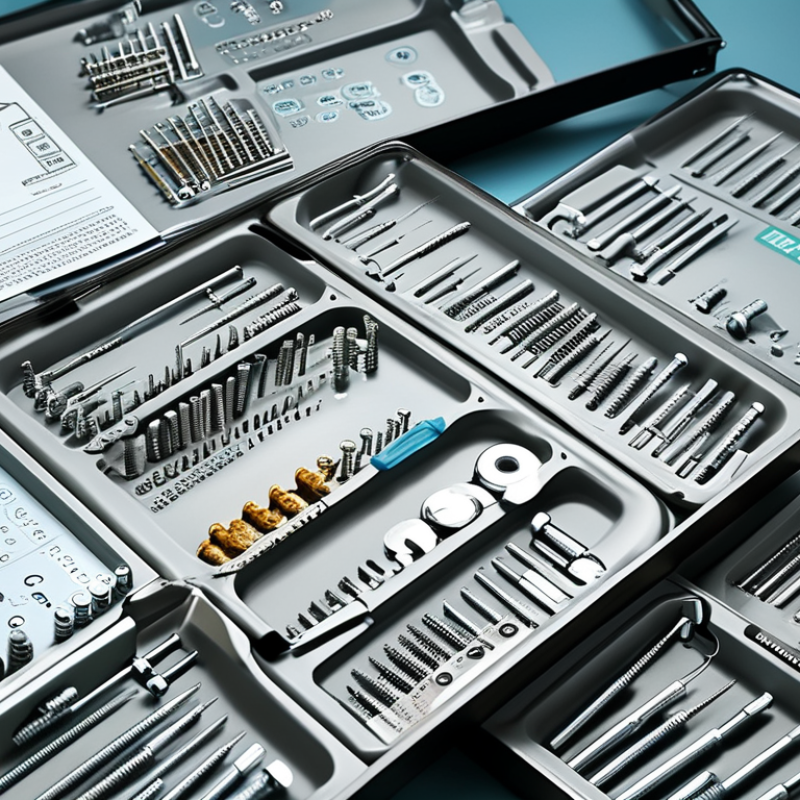
Choosing titanium cannulated screws begins with understanding their surgical purpose. The hollow shaft allows a guidewire to establish the intended trajectory before drilling and insertion. This can improve control in narrow anatomical spaces. It does not replace imaging or surgical judgment. Titanium offers a useful strength-to-weight balance and may create less magnetic artifact than some steel options. Its performance still depends on geometry, loading, and bone quality.
A screw’s diameter should match the fracture pattern and available bone, not simply the largest size. Length matters too. Threads should obtain secure purchase without entering a joint or irritating soft tissue. Partial threads may provide compression across a fracture. Full threads can support positional fixation when compression is not desired. Head shape, thread pitch, and cannulation must match the guidewire and instruments. Small mismatches can waste time.
In practice, surgical teams review radiographs or CT, the planned approach, and bone quality before selection. Osteoporotic bone may require another fixation strategy, even when the screw appears suitable. Sterile handling and the approved surgical technique remain essential. A practical check is simple: can the guidewire remain controlled, can the screw seat fully, and is the final position confirmed in multiple views? The design looks straightforward. Real anatomy is not. A planning assumption may fail during surgery, so current evidence, local protocols, and the surgeon’s assessment should guide the final choice.
| Tip | Design or Selection Dimension | What to Evaluate | Surgical Purpose and Benefit | Practical Checks |
|---|---|---|---|---|
| 1 | Match the screw diameter to the anatomy | Consider bone size, fracture pattern, available purchase, and the risk of weakening the bone with an oversized implant. | A suitable diameter can provide adequate fixation while limiting unnecessary bone removal and interference with nearby structures. | Review imaging and the surgical plan; confirm that the selected guidewire and drill are compatible with the screw system. |
| 2 | Choose the correct screw length | Assess the measured bone depth, desired thread engagement, fracture compression requirements, and the position of the far cortex. | The correct length helps achieve intended fixation and compression without excessive protrusion into soft tissue or joint space. | Use calibrated depth measurement and confirm the implant position in more than one imaging view when clinically appropriate. |
| 3 | Understand thread configuration | Compare partial-thread and fully threaded designs, thread pitch, thread depth, and the intended relationship between the threads and fracture line. | A partially threaded screw may support interfragmentary compression when the near fragment is appropriately prepared, while a fully threaded screw may be selected when length stability or positional fixation is the priority. | Verify that the thread design matches the fixation objective and that the thread path will not unintentionally cross the intended compression zone. |
| 4 | Check cannulation and guidewire compatibility | Evaluate the central cannulation diameter, guidewire size, instrument fit, and visibility of the wire during insertion. | Cannulation allows the screw to be guided along a pre-positioned wire, which can improve trajectory control in minimally invasive or anatomically constrained procedures. | Use only the specified guidewire and compatible instruments; confirm that the wire is not advanced beyond the intended surgical depth. |
| 5 | Select the appropriate head and recess design | Consider head profile, countersinking requirements, driver recess geometry, and the need to avoid damage to surrounding cartilage or soft tissue. | A suitable head design can improve seating, torque transfer, and control of implant prominence at the bone surface. | Confirm complete driver engagement and follow the recommended insertion technique; avoid excessive torque that could damage the recess or bone. |
| 6 | Consider titanium material characteristics | Review the titanium alloy specification, mechanical requirements, corrosion resistance, imaging considerations, and the patient’s clinical needs. | Titanium alloys are widely used because they combine relatively low density, high strength-to-weight performance, and good corrosion resistance. Titanium is also generally compatible with radiographic imaging, although it can create imaging artifacts. | Confirm the material designation and regulatory documentation; assess MRI conditions according to the specific implant labeling and institutional protocol. |
| 7 | Align the screw design with the surgical purpose | Define whether the primary objective is compression, positional fixation, neutralization, fragment capture, or temporary fixation. | Design selection should support the biomechanics of the treated site, fracture stability, bone quality, and the broader fixation construct. | Confirm the indication, patient anatomy, bone quality, reduction, and planned postoperative management with the qualified surgical team. |
Note: Implant selection, insertion technique, and postoperative management must follow the applicable device instructions, surgical training, and institutional clinical protocols.
: Match the diameter to bone size, fracture pattern, and fixation demand. A wider screw may improve purchase but remove more bone. Measure the corridor using calibrated radiographs or CT. Confirm the safe path during surgery. Do not trust one image.
Measure over the guidewire and account for countersinking. The screw should cross the fracture or fusion site. It also needs enough far-side purchase. Too short may reduce stability. Too long may irritate soft tissue or threaten nearby structures.
No. A tidy number may still be unsafe. Swelling, oblique fractures, and imperfect reduction can change the measurement. Recheck the length after reduction and before final insertion.
Thread design affects compression, grip, and fracture control. Fully threaded screws can resist sliding. Partially threaded screws may provide interfragmentary compression when the near segment is prepared correctly.
Match them to bone quality and the intended mechanical effect. Poorly matched threads may compress unevenly. Review imaging and technique with the treating specialist. Small details matter.
Check the driver size, guide-wire diameter, thread profile, and cannulation length. Request a compatibility matrix. Confirm torque limits. Inspect trial instruments physically. A drawing can mislead.
Confirm the titanium alloy specification and relevant material testing. Review corrosion data, surface treatment, and sterilization instructions. Quality certification supports a system, but it does not prove every batch is perfect.
Request lot traceability, certificates of analysis, inspection records, and nonconformance procedures. Independently verify certificate validity. Review complaint-response times and recent audit evidence. Test samples under realistic surgical conditions.
Measure insertion torque, guide-wire passage, head engagement, and cleaning access. Inspect packaging integrity and labeling. Document unresolved questions before approval. We may overlook a few millimeters. Recheck everything.
Choosing Titanium Cannulated Screws requires careful consideration of both surgical objectives and patient-specific factors. Their hollow design can support guidewire-assisted placement and accurate fragment fixation, but selecting the appropriate diameter, length, and thread configuration is essential for stability, compression, and soft-tissue protection. The screw should match the fracture pattern, anatomical location, and available bone stock, while thread design should be evaluated according to the need for compression or positional fixation.
Bone quality also influences screw performance, as weaker bone may require a different purchase strategy than dense cortical bone. In addition, evaluate titanium’s biocompatibility, corrosion resistance, strength, and compatibility with sterilization processes. Before use, confirm that the screws work correctly with the intended instruments and guidewires, and verify compliance with applicable quality and safety standards. A dependable supplier should provide consistent manufacturing, accurate product specifications, traceability, and responsive technical support. Together, these considerations help clinicians select Titanium Cannulated Screws that support efficient, controlled, and reliable surgical fixation.
