Medisplint
Posterior Pedicle Screw Systems are central to many spinal fixation procedures, where screw trajectory, rod fit, and construct stability matter in the operating room. Interest in these systems also reflects a substantial clinical need. The World Health Organization’s 2023 low-back-pain fact sheet estimates that 619 million people experienced low back pain in 2020, with cases projected to reach 843 million by 2050. This figure describes a global health burden, not demand for spinal implants; it should not be mistaken for a market-size estimate.
For buyers comparing China’s manufacturers, headline specifications are only a starting point. Material traceability, dimensional consistency, instrument compatibility, and clear technical documentation deserve close review. Spine-care researcher Dr. Richard A. Deyo’s published work offers a useful reminder: treatment decisions should be grounded in evidence and patient outcomes, rather than device claims alone. That is a paraphrase of his broader work, not a direct quotation. A careful distinction matters.
This guide introduces leading Chinese suppliers and the practical factors that may help hospitals and distributors assess them. Product listings and company statements can be useful, but they do not independently establish clinical performance. Verify claims against current technical files and qualified clinical review. No supplier is the right fit for every procedure.
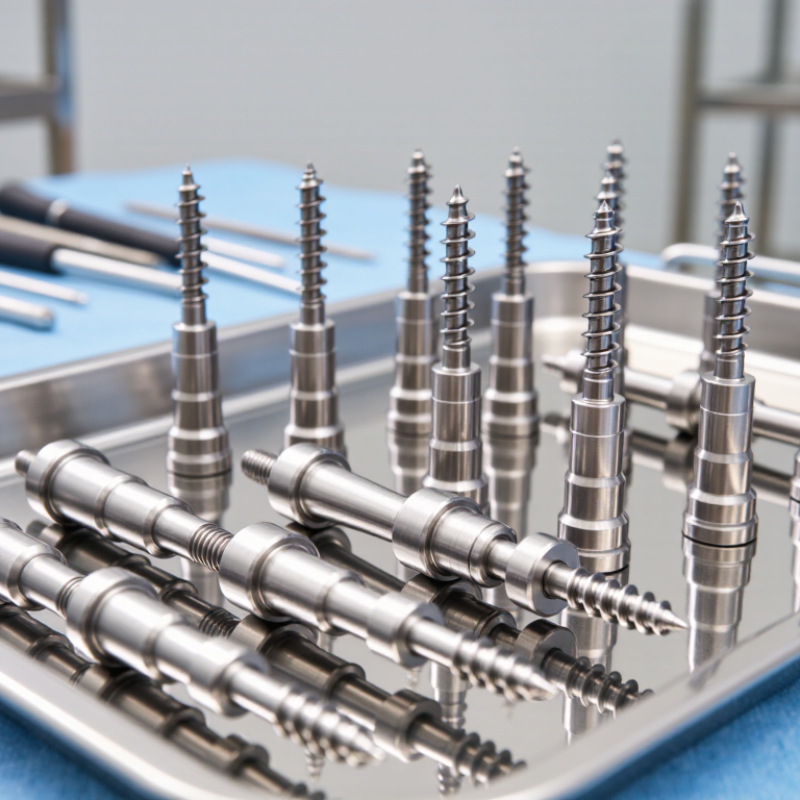
A posterior pedicle screw system stabilizes the spine from the back. Its main parts are pedicle screws, connecting rods, and locking caps; some constructs also use cross-links. Screws pass through the vertebral pedicles into the vertebral bodies, then rods connect them to limit unwanted movement. Small parts matter. System design and sizing must match the patient’s anatomy and the planned spinal levels.
Surgeons may consider these systems for selected cases involving spinal instability, deformity, certain fractures, or degenerative conditions. The decision depends on symptoms, examination findings, imaging, bone quality, and overall health. A screw is not a treatment for every type of back pain. Pedicle shape and size vary between people, and nearby nerves and vessels require careful consideration. Even clear images cannot remove every uncertainty.
Tips: Ask which spinal levels are planned and why, and how imaging guides screw placement. Discuss expected benefits, risks, and alternatives with a qualified spine specialist. Manufacturer specifications can help explain device dimensions, but they do not replace clinical judgment. A useful detail to clarify: the best-fitting system is not automatically the right treatment.
Posterior pedicle screw systems differ most at the screw head. A monoaxial screw fixes the head in line with the shaft, giving surgeons direct leverage during rod reduction and rotational correction. A polyaxial head pivots, helping the rod seat when screw trajectories vary. That flexibility can ease assembly, but it may change how force transfers through the construct. Fit matters.
Rod configuration matters just as much. Confirm compatibility among screw heads, rod diameter, locking caps, and reduction instruments; visually similar parts are not automatically interchangeable. In supplier evaluations in China, request construct-level fatigue data and test methods, such as ASTM F1717, alongside material and traceability records. Check whether the tested assembly matches the proposed screw-rod combination. A component test alone is not enough.
Fortune Business Insights valued the global spinal implants market at US$11.12 billion in 2023 and projected US$17.89 billion by 2032. That market estimate signals continued demand, not clinical superiority for either head design. Comparative clinical evidence should guide claims about outcomes; laboratory performance cannot replace it. In practice, anatomy, correction goals, and surgeon technique shape the choice. Polyaxial heads can simplify rod capture, while monoaxial heads may offer firmer correction control. Neither is best in every case.
This qualitative feature map compares common design characteristics, not clinical performance or product-specific specifications. A value of 1 indicates the feature is characteristic of the design; 0 indicates it is not. Monoaxial screw heads are fixed relative to the shaft, while polyaxial heads can pivot before locking to help accommodate rod alignment. Both designs connect screws to a rod using a locking mechanism.
For posterior pedicle screw systems, titanium alloy selection affects strength, imaging compatibility, and manufacturing consistency. ASTM F136 covers wrought titanium-6aluminium-4vanadium ELI alloy, while ISO 5832-3 specifies wrought titanium-6aluminium-4vanadium alloy for surgical implants. These standards are useful starting points, not proof that a finished screw will perform safely in every design.
Check the exact edition and material certificate. ASTM F136 commonly specifies minimum tensile strength of 860 MPa and yield strength of 795 MPa; ISO 5832-3 specifies minimum tensile strength of 860 MPa and 0.2% proof stress of 780 MPa. The figures are not interchangeable. A small difference matters. For Chinese manufacturers, buyers should review heat-lot traceability, chemical composition, mechanical test results, and evidence that machining and surface finishing do not compromise the material. Ask whether testing covers the supplied product form, not just a general alloy sample. This detail is easy to miss.
Standards describe material requirements; they do not establish fatigue life for a particular screw geometry. Thread-root finish, core diameter, and connection design also influence fatigue performance. Request relevant fatigue-test methods and results, alongside sterilization and packaging validation records. A polished certificate alone is not enough. Confirm that the documentation matches the actual production lot and device configuration.
For posterior pedicle screw systems, placement accuracy matters more than a polished product specification. The Gertzbein–Robbins scale offers a practical way to describe how far a screw crosses the pedicle cortex. Grade A indicates no breach; Grade B indicates a breach under 2 mm. A breach of 2 mm or more enters a higher category and deserves careful review. Measure the greatest cortical violation on suitable CT images, checking axial and multiplanar views. Small differences in slice thickness, metal artifact, or reader judgment can change a borderline measurement.
The number is useful, but it is not the whole clinical picture. Note the breach direction, nearby anatomy, symptoms, and screw trajectory; a medial breach may raise different concerns from a lateral one. Two millimeters is a classification boundary, not a guarantee of safety. Review borderline cases with consistent imaging methods and experienced clinicians, and document the measurement rather than relying on memory. Even careful readers may disagree by a fraction of a millimeter. That uncertainty should be acknowledged, not hidden. For manufacturers and surgical teams, clear placement data and repeatable assessment methods make comparisons more credible than isolated accuracy claims.
When evaluating Chinese manufacturers of posterior pedicle screw systems, verify the NMPA Class III registration for the exact product. Check its registration number, holder, intended use, and listed models against the system being offered. A certificate for a related device may not cover every screw, rod, or configuration. Details matter.
ISO 13485 certification provides another useful checkpoint. Review the certificate’s validity, issuing body, manufacturing site, and scope. The scope should match relevant activities, such as design, production, or sterilization, where applicable. Ask how the manufacturer controls suppliers, tracks batches, and handles nonconformities. A certificate is useful, but it is not proof that every process works perfectly.
Request supporting records, including material specifications, inspection procedures, and sterilization validation when relevant. Confirm that product labels and technical documents match the registered device. If possible, review sample traceability records from raw material to finished implant. These checks take time, and paperwork can still leave unanswered questions. A careful assessment should note those gaps rather than treating registration and certification as automatic guarantees of performance.
It covers wrought titanium-6aluminium-4vanadium ELI alloy for surgical implants. It sets material requirements, not a finished screw’s performance.
Both address wrought titanium-6aluminium-4vanadium, but their specified strength values differ. Check the exact edition and certificate.
ASTM F136 commonly specifies minimum tensile strength of 860 MPa and yield strength of 795 MPa. ISO 5832-3 specifies 860 MPa tensile strength and 780 MPa 0.2% proof stress. These figures are not interchangeable.
Check heat-lot traceability, chemical composition, and mechanical test results. Confirm testing covers the supplied product form. Easy detail to miss.
No. Thread-root finish, core diameter, and connection design also affect fatigue performance. Request relevant test methods and results.
Review sterilization and packaging validation records. Confirm documents match the actual production lot and device configuration. A polished certificate alone is not enough.
Grade A means no cortical breach. Grade B means a breach under 2 mm. A breach of 2 mm or more enters a higher category.
Measure the greatest cortical violation on suitable CT images, using axial and multiplanar views. Slice thickness, metal artifact, and reader judgment can affect results. Even careful readers may disagree.
No. Consider breach direction, nearby anatomy, symptoms, and screw trajectory. A 2 mm boundary classifies the breach; it does not guarantee safety. We should acknowledge uncertainty.
Posterior Pedicle Screw Systems are designed to stabilize the spine by connecting pedicle screws with rods, helping maintain alignment and support fusion in selected spinal conditions. Their components, anatomical placement, and clinical indications are important considerations when assessing a system. Monoaxial screws provide a fixed screw-head angle, while polyaxial designs allow the head to move in multiple directions, offering different options for adapting screw-and-rod configurations to a patient’s anatomy and surgical plan.
This overview also considers implant materials, including titanium alloys evaluated against ASTM F136 and ISO 5832-3 requirements, and screw placement accuracy using the Gertzbein–Robbins classification, where a breach of 2 mm is a key threshold. Chinese manufacturers can be assessed through relevant NMPA Class III registration and ISO 13485 quality-management credentials, alongside product documentation and manufacturing controls. These criteria provide a structured basis for comparing systems without relying on brand-specific claims.