Medisplint Medisplint

10 Best Cortical Screws for Orthopedic Surgery?

Time:2026-09-30 Author:Sienna
0%

Choosing the right cortical screws can influence fixation strength, surgical efficiency, and patient recovery. This guide examines 10 best cortical screws for orthopedic surgery through practical and clinical considerations. It focuses on thread design, core diameter, head geometry, material quality, and compatibility with plates or instruments. These details matter when a screw must hold firmly in dense cortical bone.

The discussion draws on orthopedic principles, manufacturer specifications, and common operating-room experience. A reliable cortical screw should offer predictable insertion, secure purchase, and consistent performance under appropriate surgical technique. Some models may perform better in compact bone, while others suit minimally invasive procedures or specific plating systems. No single screw is ideal for every fracture. That is worth remembering. Surgeon training, imaging, patient anatomy, and implant-system compatibility remain essential factors. This overview is informative, not a substitute for professional judgment or institutional protocols. Even experienced teams can reassess their preferences after unexpected stripping, difficult angles, or limited bone stock. Small details matter. A carefully selected screw may reduce unnecessary adjustments during surgery, but product claims should still be checked against independent evidence and current clinical guidance. Expect practical comparisons, honest limitations, and a closer look at how each option may fit real orthopedic workflows.
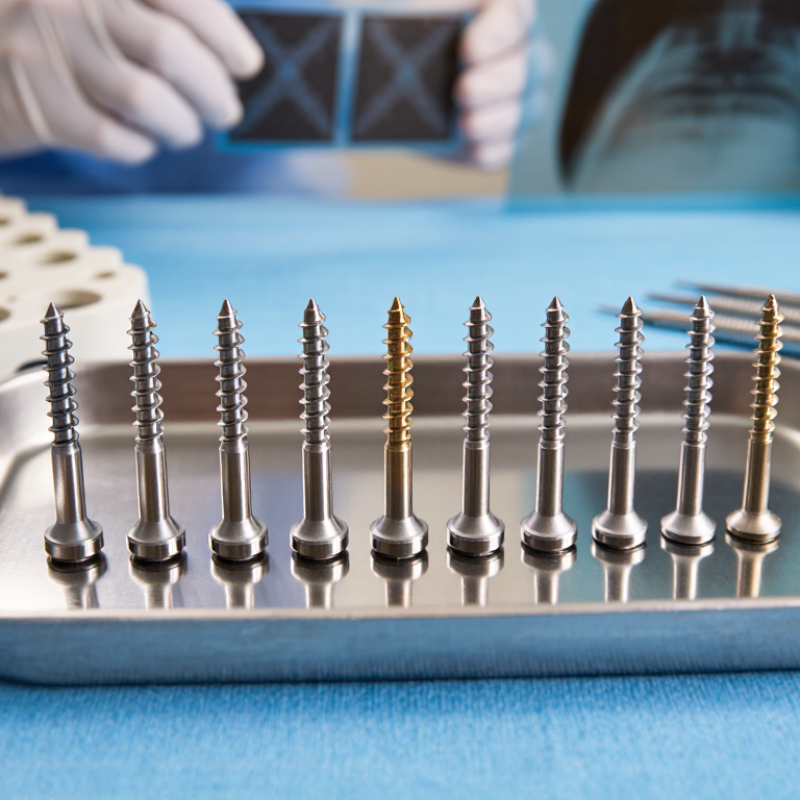
10 Best Cortical Screws for Orthopedic Surgery?

Cortical Screw Anatomy and the 2.0–4.5 mm Diameter Range

Cortical screws are designed for dense bone, where threads must engage a relatively thin outer shell. Their threads are usually finer and closer together than cancellous screw threads. The core diameter influences bending strength, while the outer diameter determines thread purchase. In the 2.0–4.5 mm range, small changes matter. A 2.0 mm screw suits delicate fixation, while 2.7 and 3.5 mm options often support hand, foot, and small-fragment applications. A 4.5 mm screw provides greater mechanical capacity, but it also requires more bone and careful drilling.

Clinical selection should follow anatomy, fracture pattern, and load demands, not diameter alone. The AO Surgery Reference emphasizes accurate drilling, appropriate screw length, and bicortical purchase when indicated. A 2021 Lancet Healthy Longevity analysis estimated 178 million new fractures globally in 2019, showing why consistent fixation principles remain important. Still, size charts can create false confidence. A larger screw is not automatically safer. Excessive diameter may weaken a narrow cortex or damage nearby structures. I would also question any recommendation made without considering bone quality, plate position, and insertion angle. Practical experience matters here: the surgeon should feel controlled resistance, not force the screw through the far cortex. Misjudgment happens. Careful imaging, calibrated instruments, and documented torque practices help reduce it.

Mechanical Criteria: Thread Pitch, Core Diameter, and Pullout Strength

10 Best Cortical Screws for Orthopedic Surgery?

Mechanical Criteria: Thread Pitch, Core Diameter, and Pullout Strength

Choosing a cortical screw requires more than counting threads or comparing sizes. Thread pitch controls how far the screw advances with each rotation. A fine pitch can improve purchase in dense cortical bone. It may also increase insertion time and heat generation. A coarser pitch advances quickly but can reduce thread engagement in a thin cortex. Small differences matter.

Core diameter affects bending resistance and stress concentration. A larger core usually improves strength under repeated loading. However, excessive diameter removes more bone and may weaken the surrounding cortex. The ideal balance depends on anatomy, fracture pattern, and load direction. I have found that a screw feeling tight does not always mean it has strong fixation.

Pullout strength depends on several linked factors. These include cortical thickness, pilot-hole accuracy, insertion torque, thread depth, and screw orientation. Thread pitch and core diameter help, but neither predicts performance alone. Laboratory values can mislead when clinical bone quality differs. A dry test block cannot reproduce osteoporosis, micromotion, or cyclic loading.

Experienced teams should review mechanical data alongside imaging and surgical findings. The pilot hole deserves careful attention. An undersized hole may raise torque and damage bone, while an oversized hole reduces thread contact. Device instructions and validated testing remain essential.

“Best” is often conditional, and that is the uncomfortable part.

The 10 Best Cortical Screw Types by Indication and Alloy

10 Best Cortical Screws for Orthopedic Surgery?

The “best” cortical screw depends on bone quality, fracture pattern, and fixation goals. A neat ranking can mislead. The AO Surgery Reference describes cortical screws as fine-threaded options designed for dense diaphyseal bone and controlled purchase. Based on indication and alloy, ten useful configurations include fully threaded stainless-steel screws for plate fixation, partially threaded stainless-steel lag screws for compression, cannulated titanium screws for guidewire-assisted placement, and headless titanium compression screws for small-bone fixation. Titanium alloy is also useful when reduced magnetic artifact or improved biocompatibility matters. Stainless steel often provides higher stiffness and familiar handling.

For complex fixation, consider fully threaded locking cortical screws in titanium alloy, bicortical stainless-steel screws for diaphyseal stability, and unicortical titanium screws near vulnerable neurovascular structures. Variable-pitch titanium screws can support compression across selected fracture gaps. Titanium alloy, commonly Ti-6Al-4V, offers a lower elastic modulus than stainless steel, although its flexibility is not automatically an advantage. Cobalt-chromium designs may provide high strength, but they are less typical for routine cortical fixation and require careful system compatibility. ASTM F543 testing evaluates metallic bone-screw performance, including insertion and torsional behavior. The 2019 Global Burden of Disease analysis reported about 178 million new fractures worldwide, highlighting the need for reliable, indication-specific fixation. Real cases remain messier. Poor thread engagement, over-tightening, or an unsuitable alloy can defeat an otherwise excellent screw choice.

Cortical Screw Materials: Typical Elastic Modulus

A material-property comparison for common orthopedic implant alloys. Material choice depends on the procedure, fixation needs, and surgeon preference—not modulus alone.

Values are approximate typical Young’s modulus: commercially pure titanium, 105 GPa; Ti-6Al-4V alloy, 110 GPa; and 316L stainless steel, 193 GPa. These are material properties, not clinical outcome or screw-strength ratings.

Titanium Versus Stainless Steel: Approximately 110 vs 190 GPa Modulus

Choosing the 10 best cortical screws requires more than comparing thread shape or purchase strength. The implant’s elastic modulus also affects load transfer. Titanium alloys typically measure about 110 GPa, while stainless steel approaches 190 GPa. Bone is far less stiff than either material. The difference matters.

A titanium cortical screw usually creates a smaller stiffness mismatch with surrounding bone. This may reduce stress shielding and encourage a more balanced load pattern. Its lower density can also make imaging and handling more comfortable in selected procedures.

Stainless steel remains highly rigid and mechanically dependable. That rigidity can help when construct stability is the immediate priority. However, excessive stiffness may concentrate forces near the screw or plate.

Not always. Context decides.

In practical orthopedic planning, surgeons should assess bone quality, fracture pattern, screw diameter, plate design, and expected loading. A 110 versus 190 GPa comparison is useful, but it cannot predict clinical performance alone. I would hesitate to label one material universally superior. Patient anatomy and healing biology often matter more than a headline number. Surgical teams should verify fatigue data, corrosion resistance, sterilization compatibility, and imaging requirements through reliable technical documentation. Standards-based testing and peer-reviewed evidence strengthen that decision. My own reflection is simple: material stiffness is easy to quote, but harder to interpret inside a living, changing bone environment.

Sizing, Insertion Torque, and AO Principles for Safe Fixation

10 Best Cortical Screws for Orthopedic Surgery? Sizing, Insertion Torque, and AO Principles for Safe Fixation

Choosing a cortical screw starts with the bone, not a “best” list. AO Foundation technical tables pair a 3.5 mm cortical screw with a 2.5 mm pilot drill and a 4.5 mm screw with a 3.2 mm drill. These dimensions help preserve thread purchase while allowing insertion. Confirm the system’s current instructions; screw design and technique can vary. Select a length that engages the far cortex when the fixation plan calls for bicortical purchase, without unnecessary protrusion.

Insertion torque is a warning signal, not a universal target. ASTM F543-23 describes standardized tests for metallic bone-screw performance, including driving torque; laboratory results do not set a safe torque for every patient. Dense bone can resist advancement, while a sudden loss of resistance may indicate stripped threads. Stop and reassess rather than forcing the screw. AO principles also favor accurate reduction, appropriate plate positioning, and controlled drilling. Small details matter.

Tips: Keep the drill aligned with the planned trajectory, clear debris, and use a depth gauge rather than guessing. Check the screw head seats flush. In osteoporotic bone, purchase may be weaker; rethink the construct instead of simply tightening harder. Even experienced hands can misread resistance. That deserves a second look.

FAQS

What are cortical screws designed for?

They are designed to engage dense outer bone. Their threads are usually finer and closer together than cancellous screw threads.

How do screw diameters from 2.0 to 4.5 mm differ?

A 2.0 mm screw may suit delicate fixation. Options around 2.7 and 3.5 mm are often used for hand, foot, and small-fragment applications. A 4.5 mm screw offers greater mechanical capacity but needs more bone and careful drilling.

Is a larger screw automatically safer?

No. A larger diameter may weaken a narrow cortex or threaten nearby structures. Size alone is not enough.

What pilot drill sizes are commonly paired with 3.5 and 4.5 mm screws?

Common technical tables pair a 2.5 mm drill with a 3.5 mm screw and a 3.2 mm drill with a 4.5 mm screw. Confirm the current instructions for the specific screw system.

How should screw length be selected?

Follow the fixation plan and anatomy. When bicortical purchase is intended, engage the far cortex without unnecessary protrusion.

What does insertion resistance tell the surgeon?

Controlled resistance can be expected. A sudden loss of resistance may signal stripped threads. Stop and reassess.

Is there one safe insertion-torque target?

No universal target applies to every patient. Laboratory torque tests do not set a safe value for every bone or procedure.

What details can help during insertion?

Keep the drill aligned with the planned path, clear debris, and use a depth gauge. Check that the screw head sits flush. Small details matter.

What if bone quality is poor?

Purchase may be weaker, especially in osteoporotic bone. Reconsider the fixation construct instead of simply tightening harder. I might still miss something; resistance can be misread.

Conclusion

This guide examines the essential features of Cortical Screws used in orthopedic fixation, focusing on anatomy, design, and clinical selection. It explains how screw diameters from 2.0 to 4.5 mm relate to bone size, fracture pattern, and load requirements. Key mechanical factors—including thread pitch, core diameter, purchase depth, and pullout strength—are discussed to clarify how different cortical screw types perform in various fixation situations. The guide also presents ten screw categories organized by indication and alloy, rather than by brand or manufacturer.

A comparison of titanium and stainless steel highlights their approximate elastic moduli of 110 and 190 GPa, respectively, along with practical differences in stiffness, imaging behavior, and handling. Final sections address diameter and length selection, insertion torque, predrilling, tapping, and alignment according to fundamental AO fixation principles. Together, these considerations help surgeons choose appropriate screws, minimize insertion-related complications, and achieve stable fixation while respecting bone quality, soft-tissue conditions, and the specific mechanical demands of each procedure.

Sienna

Sienna

Sienna is a skilled marketing professional with a deep expertise in our company’s core products and services. With a passion for innovation and detail, she plays a pivotal role in crafting insightful blog posts that not only highlight the unique features of our offerings but also provide valuable......